Audit Committee
- Financial reporting integrity
- Internal and external audit
- Internal controls
- Whistleblowing
- Non-financial and ESG assurance
A practical governance guide for board leaders
The practical, CPD-aligned handbook for Chairs, Non-Executive Directors and governance professionals seeking stronger oversight, greater resilience and better boardroom decisions.
Covering Audit, Risk, Remuneration, Nomination, ESG and Sustainability committees, with contemporary guidance on cyber risk, artificial intelligence, disclosure integrity and cross-committee accountability.
For Board Chairs • Non-Executive Directors • Committee Chairs • Company Secretaries • Governance Professionals
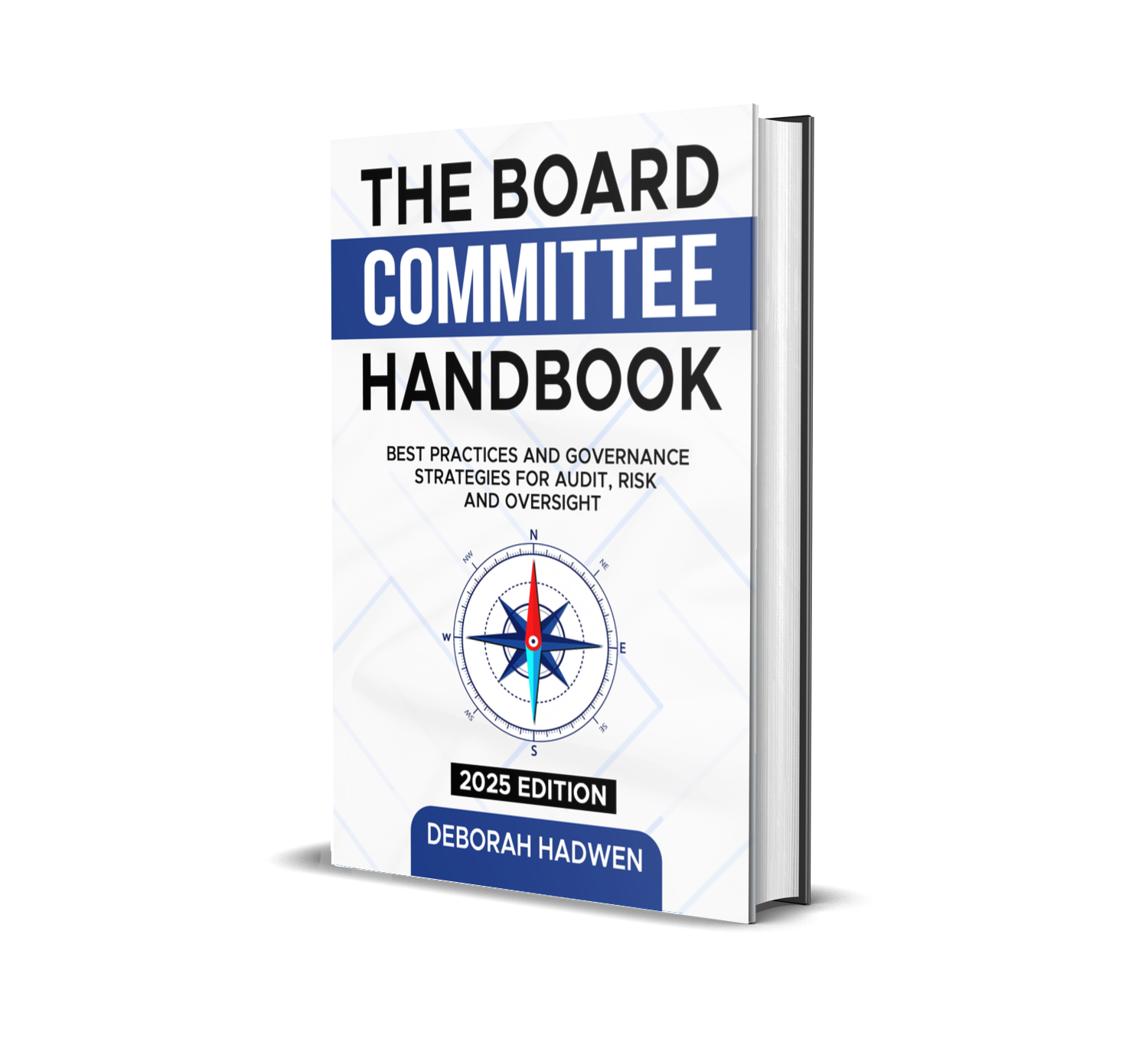
Practical guidance for contemporary board committees
The handbook
Board committees are where oversight becomes detailed, risks are challenged and critical recommendations are shaped. Yet unclear mandates, fragmented reporting and weak cross-committee coordination can undermine even experienced boards.
The Board Committee Handbook provides a practical framework for designing, leading and evaluating committees that contribute meaningfully to organisational resilience, accountability and long-term value.
Strengthen scrutiny, reporting integrity and accountability across the board's most important committees.
Address cyber, artificial intelligence, geopolitical, sustainability and emerging risks through a board-level lens.
Use board questions, frameworks, agendas, checklists and evaluation tools to turn principles into better practice.
What you'll learn
Align committee mandates, membership, structures, reporting lines and annual work plans with the organisation's governance needs.
Improve financial reporting integrity, external and internal audit oversight, whistleblowing arrangements and ESG disclosure assurance.
Equip Risk Committees to address strategic, cyber, artificial intelligence, geopolitical, third-party and operational resilience risks.
Connect remuneration, executive incentives, succession planning and board capability with sustainable long-term value.
Embed environmental, social and governance accountability into committee mandates, reporting and decision-making.
Help committee chairs strengthen agendas, relationships, constructive challenge, meeting dynamics and stakeholder trust.
Reduce gaps, duplication and fragmented oversight through clearer cross-committee responsibilities and information flows.
Governance architecture
Authority is delegated from the board and accountability returns to it. The handbook treats committees not as separate forums but as an interconnected architecture — each with a distinct mandate, all reporting into one line of responsibility.
Each committee is examined in detail across the handbook: mandate and charter design, composition, reporting lines, meeting rhythm, escalation and evaluation.
Committee coverage
Inside the book
The handbook examines not only what each committee oversees, but how committees are structured, led and connected to the wider board. It combines governance principles with contemporary case examples, practical questions and tools that can be applied in the boardroom.
Select a chapter to reveal its full contents. Page references follow the paperback edition.
Sample pages
Explore selected pages from the book and see how governance principles are translated into practical frameworks, questions and tools for boardroom use.
Choose your Amazon marketplace and preferred format. Links open on Amazon in a new tab.
Practical tools
The Board Committee Handbook is designed to be consulted, discussed and applied—not simply read once and placed on a shelf.
Use the handbook to support committee induction, annual planning, committee reviews, Chair development and continuing director education.
Who it's for
Improve committee architecture, information flow and coordination across the board.
Lead more focused meetings, encourage constructive challenge and strengthen reporting to the board.
Deepen oversight capability and contribute more effectively across different committee responsibilities.
Support committee planning, governance calendars, mandates, information flows and evaluation processes.
Use a practical reference for committee design, reviews, education and governance improvement.
Build a clearer understanding of committee responsibilities and board-level oversight expectations.
Director development
Governance expectations continue to evolve. The handbook supports directors and governance professionals in refreshing their knowledge, examining current committee practice and identifying opportunities for improvement.
It can support

The author
Non-Executive Director and former Chief Executive Officer
Deborah Hadwen is an experienced Non-Executive Director and former CEO with a career spanning technology, consulting, governance and large-scale transformation.
As a former Chief Executive Officer of Tata Consultancy Services Australia and New Zealand, she led significant growth across government, financial services and enterprise markets while managing complex strategic, technology and stakeholder environments.
Deborah now serves across listed, private and public-sector boards. Her experience includes Audit and Risk, Remuneration and Nomination, Technology and other board committees.
The Board Committee Handbook combines her practical operating experience with a commitment to helping directors translate governance principles into disciplined, effective boardroom practice.
Published by Board Directors Hub
The Board Committee Handbook is part of a broader commitment to providing experienced directors with practical, board-level governance intelligence.
Board Directors Hub provides analysis and resources for Chairs, Non-Executive Directors, committee leaders and senior board advisers, with a focus on governance, risk, regulatory developments, technology oversight and director accountability.
Buy the book
Whether you Chair a committee, serve as a Non-Executive Director or support the board as a governance professional, The Board Committee Handbook provides practical guidance for navigating rising expectations and increasingly complex oversight responsibilities.
Available through major Amazon marketplaces in paperback and Kindle editions.
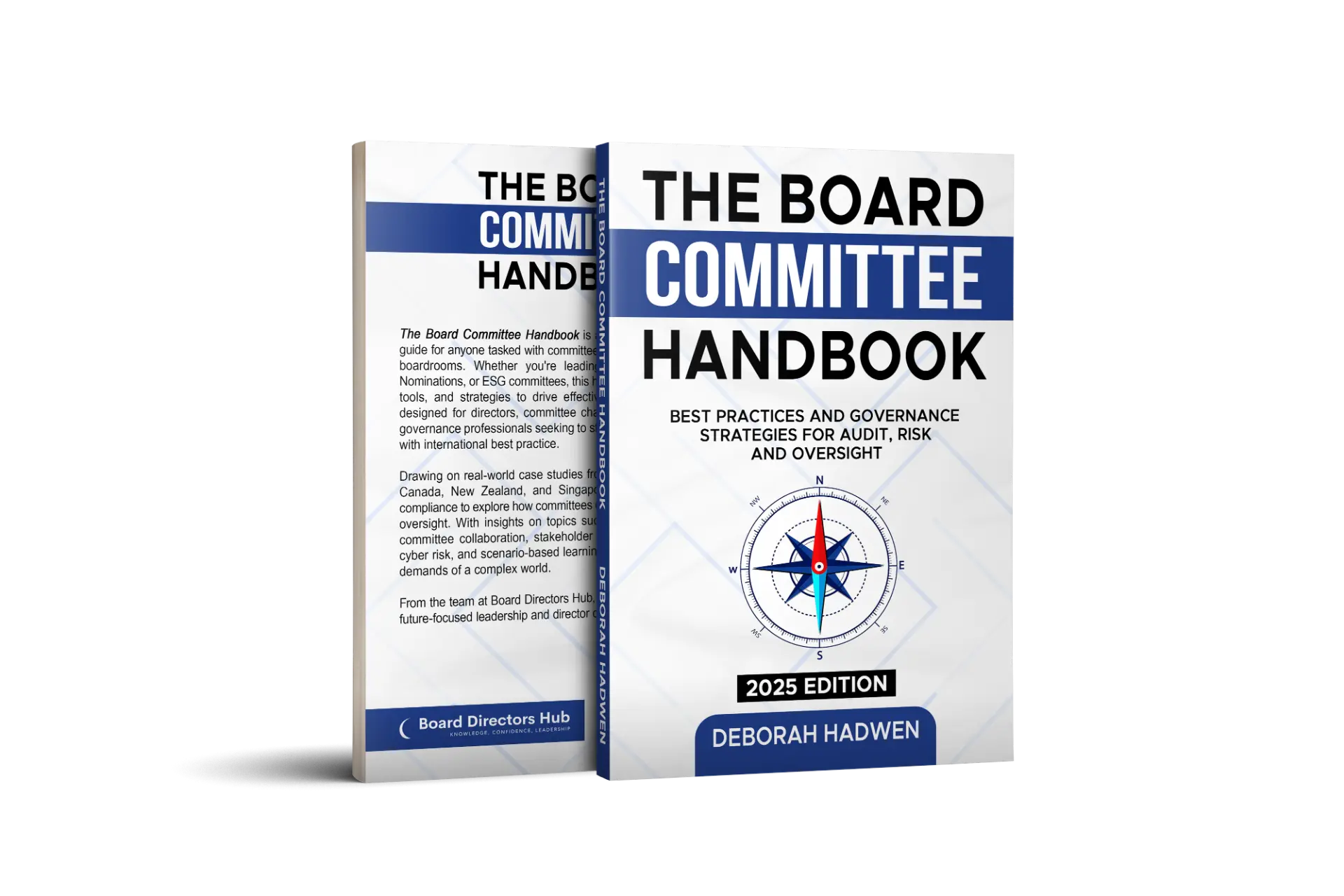
Publication details
